Tag: horror

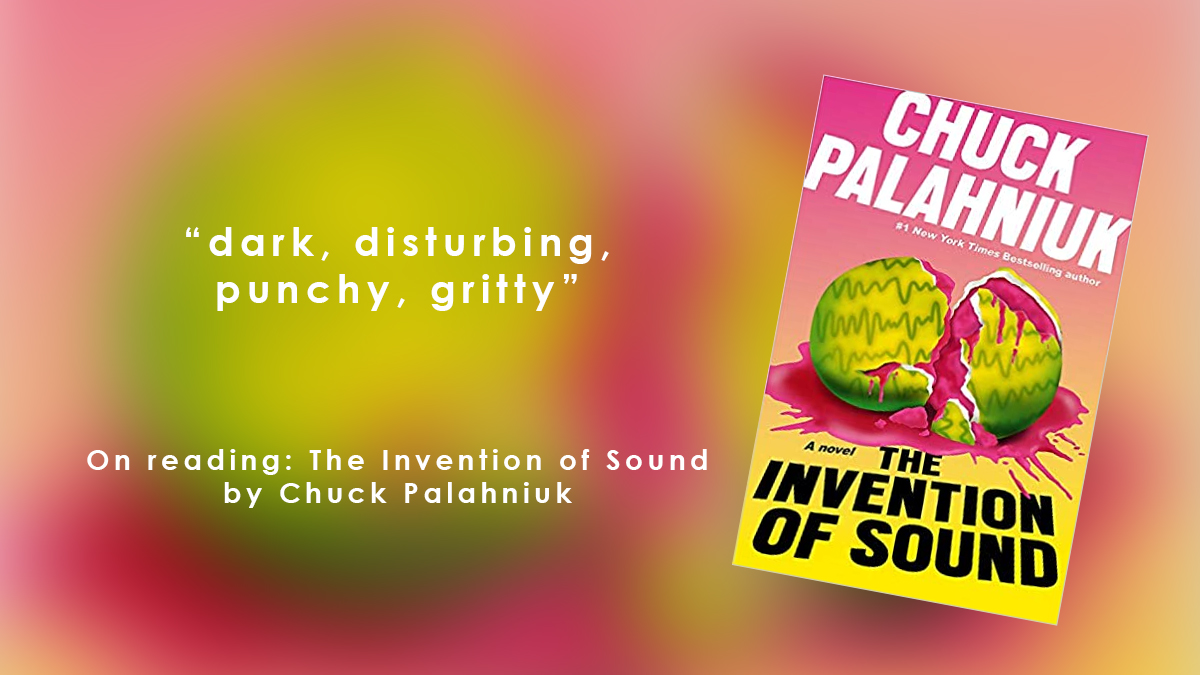
  • On reading: The Invention of Sound by Chuck Palahniuk

    On reading: The Invention of Sound by Chuck Palahniuk

    Title: The Invention of Sound

    Author: Chuck Palahniuk

    From the back: Private detective Foster Gates is a father is in search of his missing daughter, and sound engineer Mitzi harbors a secret that may help him solve the case. It’s Mitzi’s job to create the dubbed screams used in horror films and action movies. She’s the best at what she does.

    But what no one in Hollywood knows is the screams Mitzi produces are harvested from the real, horror-filled, blood-chilling screams of people in their death throes–a technique first employed by Mitzi’s father and one she continues on in his memory—a deeply conflicted serial killer compelled beyond her understanding to honor her father’s chilling legacy. Soon Foster finds himself on Mitzi’s trail. And in pursuit of her dark art, Mitzi realizes she’s created the perfect scream, one that compels anyone who hears it to mirror the sound as long as they listen to it—a highly contagious seismic event with the potential to bring the country to its knees.

    The gist: Just putting this out there front and centre, consider it a disclaimer of sorts, but Palahniuk’s writing is largely responsible for me getting back into both reading and writing many moons ago. That may or may not be a good thing, depending on your point of view. For clarity’s sake, for me that was a bloody fine thing indeed. And for reference, the specific book was Invisible Monsters and it’s basically one of my all-time favourite books ever.

    But I digress.

    The Invention of Sound is dark, disturbing, punchy, gritty. All the things you’d likely expect from a Palahniuk book. It’s a pacy read that takes you through a whirlwind of little strange things turning into big strange things turning into gory strange things turning into what-the-fuck-just-happened-there strange things. Things that start off as believable and end up as believable despite the weirdness, with many stages in between that push you there.

    It’s an interesting thing, because my other half studied sound engineering back in the day, and I remember sitting in recording studios helping to create the soundscapes for clips and idents. I never had to do a scream though and turns out THAT’S PROBABLY FOR THE BEST. This book has the grit and the twists and the turns that you’d expect from Palahniuk, along with satirical commentary on the entertainment business and the machine that grinds the sheen. He writes with a razor’s edge eye on the world as it is. Step by step, he takes you to something extreme and horrific, but however unlikely the outcome might be it’s normally something with its roots in the real.

    Favourite line: Hollywood had never lacked new ways to take pretty girls apart.

    Read if: You want Palahniuk’s trademark writing style to take you to a dark and seedy underworld of Hollywood

    Read with: Wine, headphones, and a good (or B-movie-bad) horror movie to ponder the soundtrack to.

    Get it: The Invention of Sound by Chuck Palahniuk

    ARC gratefully received from Netgalley and Little, Brown Book Group UK, Corsair

  • On reading: The Living Dead by George A. Romero and Daniel Kraus

    On reading: The Living Dead by George A. Romero and Daniel Kraus

    Title: The Living Dead

    Author: George A. Romero and Daniel Kraus

    From the back: It begins with one body. A pair of medical examiners find themselves facing a dead man who won’t stay dead.

    It spreads quickly. In a Midwestern trailer park, an African American teenage girl and a Muslim immigrant battle newly-risen friends and family.

    On a US aircraft carrier, living sailors hide from dead ones while a fanatic preaches the gospel of a new religion of death.

    At a cable news station, a surviving anchor keeps broadcasting, not knowing if anyone is watching, while his undead colleagues try to devour him.

    In DC, an autistic federal employee charts the outbreak, preserving data for a future that may never come.

    Everywhere, people are targeted by both the living and the dead.

    We think we know how this story ends. We. Are. Wrong.

    The gist: If you like zombie films and zombie books and zombies in general then you’re almost morally obligated to give this book a go. IT’S A GEORGE A. ROMERO ZOMBIE BOOK FOR GOD’S SAKE. It would be wrong not to, right?

    And we could get into the various insights and comparisons to the current states of coronavirus affairs, and how the whole zombie genre is in some ways a satirical reflection of so many facets or our modern world (let alone our modern world in the context of a global pandemic). Or we could get in to just what a damn fine ride this book is.

    There is something classic that runs through the bones of this book – whether it’s because of Romero’s involvement, or because of the inclusion of the Hoffmann Archive of survivor interviews, or because it covers so many characters’ experiences of the zombie outbreak and what comes next. Maybe it’s even because of the insight at the end of the book into how the novel came to exist. This book in some ways feels like reading a history book, the history of zombies as seen from the future.

    There’s a great range of characters, covering so many sides of society, so many angles on what was important to people in the old world and the new world. There’s fresh slants on the zombie outbreak—a particular scene in a school stands out and is just heart wrenching for reasons you probably won’t predict until you get there. There’s characters who change and grow and some of them die and some of them don’t and you’re never really going to know who’s safe until you hit the last page. And even then, can you really be sure? There’s zombie lore explored and there’s zombie questions raised. The book both complements the Living Dead films and also stands alone.

    And you’ve got to tip your hat to Kraus who carefully and respectfully brought the book to life – and you’ve also got to think that it seems like he had a lotta fun doing it, which absolutely comes through in the telling.

    Regardless of your taste in zombies, your preferences for zombie lore, this is the sort of book that needs adding to your zombie canon. I said canon, not cannon. What, you have a zombie cannon?

    The Living Dead can’t help but be a classic of the genre—if you don’t read it for the fiction, read it for the lore.

    Favourite line: Damn, she hated it when good, clean spite got fucked up with admiration.

    Read if: You like zombies. It’s a no-brainer. Pardon the pun.

    Read with: The Living Dead films ready to watch back to back, on repeat, with a pen and paper for your notes.

    Get it: The Living Dead by George A. Romero and Daniel Kraus

    ARC gratefully received from Random House UK, Transworld Publishers—Bantam Press

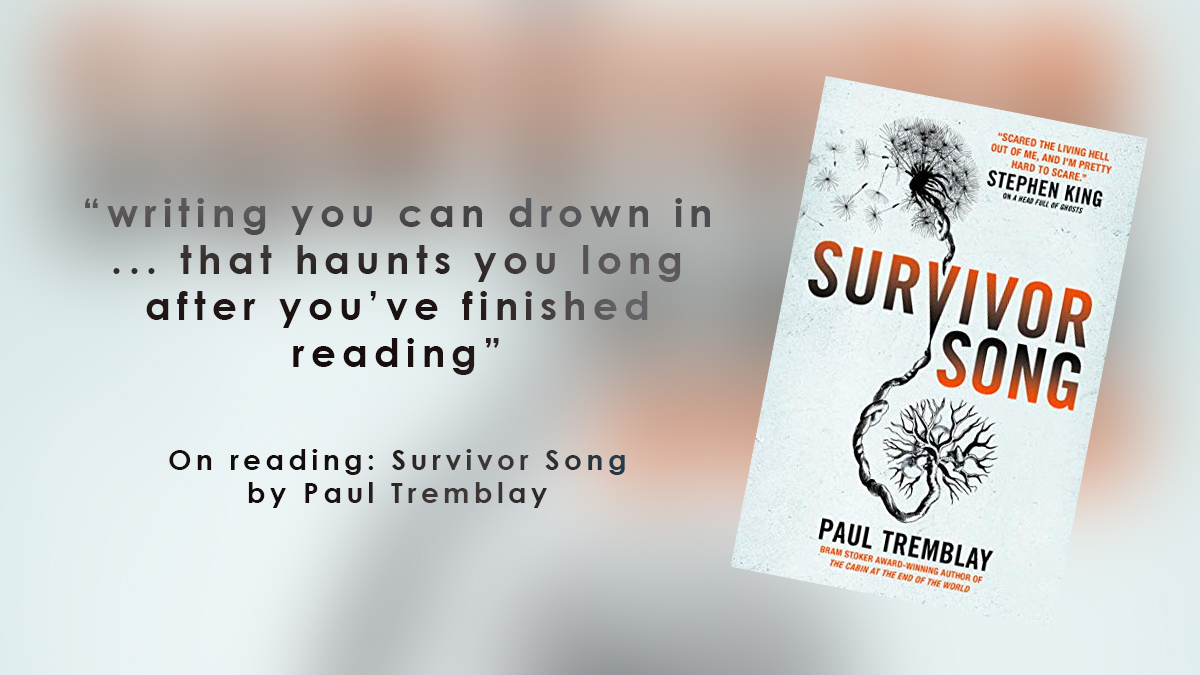
  • On reading: Survivor Song by Paul Tremblay

    On reading: Survivor Song by Paul Tremblay

    Title: Survivor Song

    Author: Paul Tremblay

    From the back: When it happens, it happens quickly.

    New England is locked down, a strict curfew the only way to stem the wildfire spread of a rabies-like virus. The hospitals cannot cope with the infected, as the pathogen’s ferociously quick incubation period overwhelms the state. The veneer of civilisation is breaking down as people live in fear of everyone around them. Staying inside is the only way to keep safe.

    But paediatrician Ramola Sherman can’t stay safe, when her friend Natalie calls her husband is dead, she’s eight months pregnant, and she’s been bitten. She is thrust into a desperate race to bring Natalie and her unborn child to a hospital, to try and save both their lives.

    Their once familiar home has becoming a violent and strange place, twisted in to a barely recognisable landscape. What should have been a simple, joyous journey becomes a brutal trial.

    The gist: If you’ve not read a Tremblay book yet then you need to remedy that immediately. Go and pick any of his back catalogue and dive straight in. I could totally stop the review there to be honest, firstly because you’ll be busy reading his books and won’t want interrupting, and secondly because you’ll undoubtedly agree that Tremblay is right up there with the best horror writers about.

    Tremblay is one of my go-to authors, one of my insta-gets. His books are addictive, the type of writing you can drown in and that haunts you long after you’ve finished reading. The Cabin at the End of the World was nigh on traumatic, in a beautiful, brutal, searing kind of way.

    And Survivor Song, taking a slice of panic, horror and heartbreak set during a rabies(-like) outbreak, is no exception.

    Tremblay has a way of getting you to know the characters, to feel their emotional turmoil—feelings are never straightforward, characters are the shades between the good and the bad, their flaws make them real and raw. There’s an honesty behind the characters that isn’t about telling lies or half-truths, it’s about showing and sharing the rough edges that everyone is made of. And so even though you’re not in the book, somehow it almost feels like you are.

    And I defy you to read Natalie’s voice-recordings to her unborn child and not get something in your eye.

    The bulk of the book only spans a short period of time, in which there’s violence, gore, death and tears, but also friendship, heroes and a touch of comedy (let’s just say don’t call them zombies). It’s tempting to file Survivor Song in with other apocalyptic-style books, but this is really a slice of a moment. It’s a cutting from a time that is not about the end of the world, but about a huge change, an end or a beginning, for the central characters. It’s about the experience of horror on an individual level. It’s a personal story, horror on a small scale that hits big.

    I won’t say too much more because this is a book you should just go ahead and lose yourself in. Pencil in a day or two with it because you won’t want to put it down.

    Then you might need a day or two more to recover.

    Favourite line: They are afraid of saying something that will make them more afraid.

    Read if: You want a slice of horror that cuts a chunk of time out of the world and places it in your mind as if it were part of your own memories.

    Read with: Your front door locked, and your groceries safely stowed away.

    Get it: Survivor Song by Paul Tremblay

    ARC gratefully received from Netgalley and Titan Books

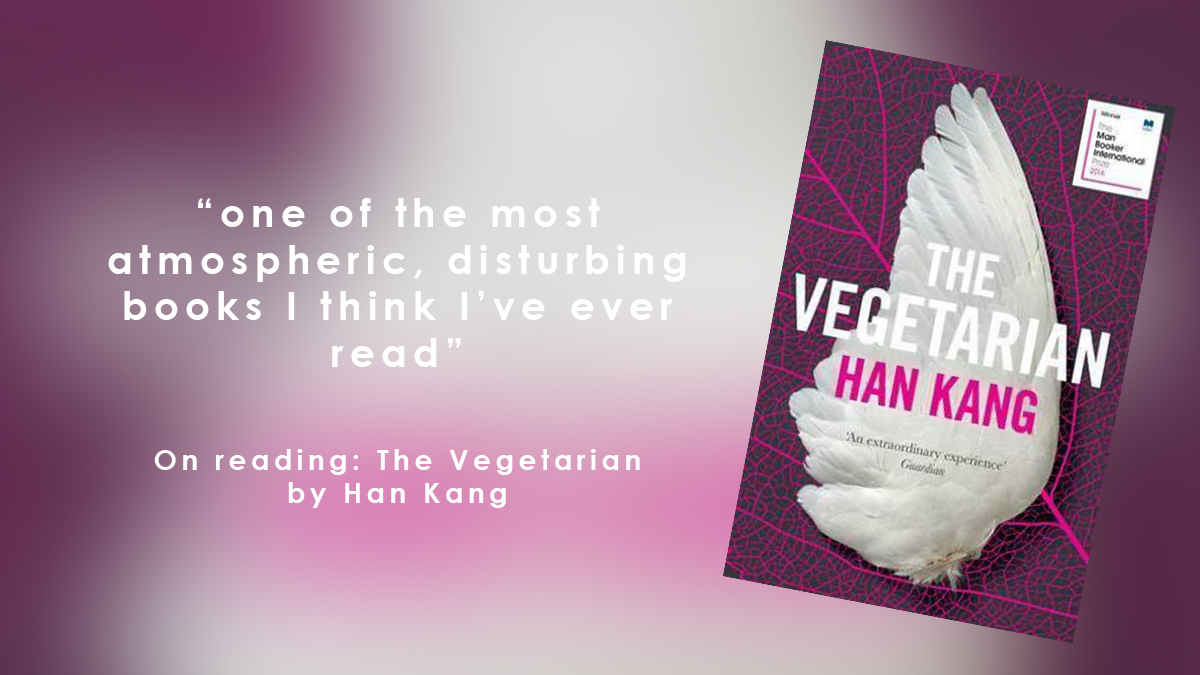
  • On reading: The Vegetarian by Han Kang

    On reading: The Vegetarian by Han Kang

    Title: The Vegetarian

    Author: Han Kang, translated by Deborah Smith

    From the back: Yeong-hye and her husband are ordinary people. He is an office worker with moderate ambitions and mild manners; she is an uninspired but dutiful wife. The acceptable flatline of their marriage is interrupted when Yeong-hye, seeking a more ‘plant-like’ existence, decides to become a vegetarian, prompted by grotesque recurring nightmares. In South Korea, where vegetarianism is almost unheard-of and societal mores are strictly obeyed, Yeong-hye’s decision is a shocking act of subversion. Her passive rebellion manifests in ever more bizarre and frightening forms, leading her bland husband to self-justified acts of sexual sadism. His cruelties drive her towards attempted suicide and hospitalisation. She unknowingly captivates her sister’s husband, a video artist. She becomes the focus of his increasingly erotic and unhinged artworks, while spiralling further and further into her fantasies of abandoning her fleshly prison and becoming – impossibly, ecstatically – a tree. 

    Fraught, disturbing and beautiful, The Vegetarian is a novel about modern day South Korea, but also a novel about shame, desire and our faltering attempts to understand others, from one imprisoned body to another. 

    The gist: I am late. 

    Late to the party in a major way. 

    Party might be the wrong word. 

    Interestingly, in relation to my post when I talked about DNF books and about needing to read books at the right time, I had actually started The Vegetarian a while ago. It wasn’t working for me at the time so I stepped back. 

    Step forward again, open up The Vegetarian, and genuinely this is one of the most atmospheric, disturbing books I think I’ve ever read. It treads the fine boards between whether something is real and whether it’s not, and regardless of what side of the boards you land on, the results are traumatic in both a personal and physical way. 

    Kang pulls no punches, and won’t swerve away from some intense topics. What starts as something that might seem a bit comical (caveat: through this British girl’s lens) with the concept of vegetarianism seeming to be so strange, the novel escalates and becomes something incredibly sinister, and at times brutal. This book descends into something so darkly tragic, it lingers in your brain. 

    The reason I mention the British lens is because this is a South Korean book, and it would not be fair for me to say that I understand the attitudes towards vegetarianism in South Korean culture. What I do know, is that in British culture I know people who do ridicule vegetarianism in a similar way to the beginnings of this book (although not to the extreme measures that we see in the first part of The Vegetarian). I know people who find the concept of vegetarianism so strange that they can’t comprehend what a vegetarian could actually eat. I don’t know if vegetarianism is seen as something culturally bizarre in South Korea. But I do know that the way that Kang shows a spiral formed of abuse, power, mental health issues and eating disorders is truly devastating. 

    The Vegetarian is, in a lot of ways, a quiet book. There’s not a lot in the way of explosive action, or dramatic show-downs. But the way in which Kang gradually ramps up a sense of unease, a sense of “maybe this could be stopped now, but nobody stepped in”, a sense of creeping dread, is so effective it is truly nightmare fuel. 

    This book is one of the most quietly disturbing books I’ve read—the sort of book that leaves ghosts imprinted on you, simmering under the surface, rearing their heads at unsuspecting moments. There’s power in Kang’s words, and sadness at their heart. 

    Read it. 

    Favourite line: “perhaps the one she’d so earnestly wanted to help, was not him but herself.”

    Read if: You want an original, disturbing read exploring power, abuse and a devastating spiral through the mind.

    Read with: Anything to eat that didn’t previously breathe.

    Get it: The Vegetarian by Han Kang

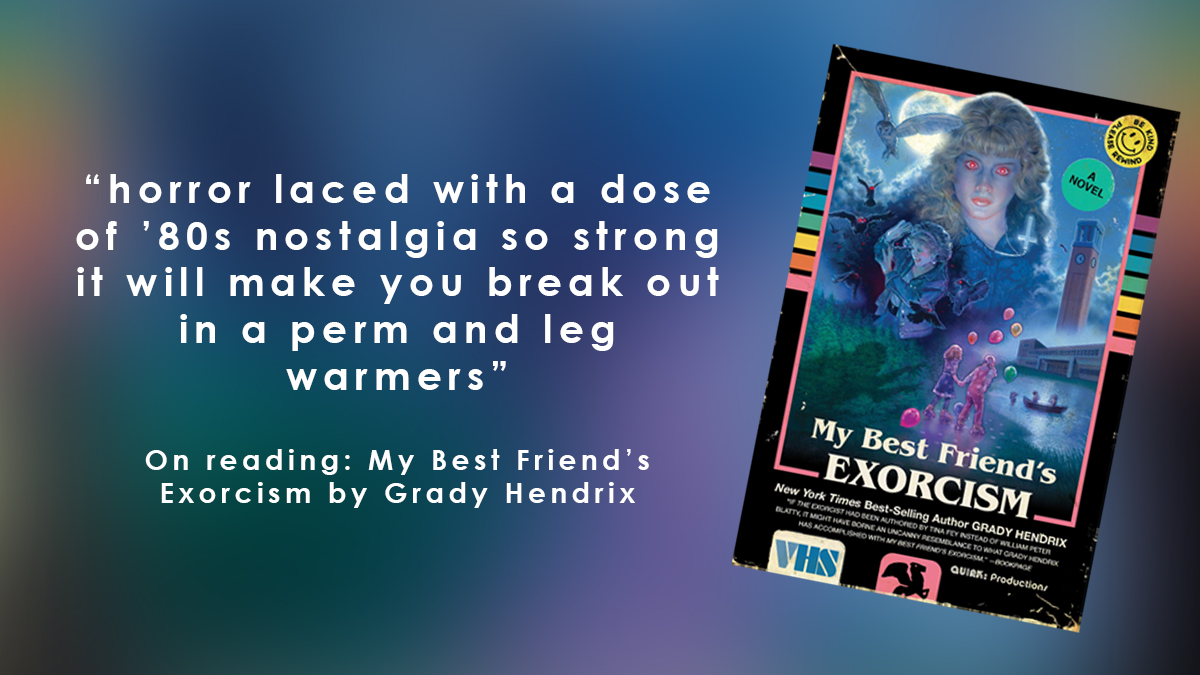
  • On reading: My Best Friend’s Exorcism by Grady Hendrix

    On reading: My Best Friend’s Exorcism by Grady Hendrix

    Title: My Best Friend’s Exorcism

    Author: Grady Hendrix

    From the back: An unholy hybrid of Beaches and The Exorcist that blends teen angst, adolescent drama, unspeakable horrors, and a mix of ’80s pop songs into a pulse-pounding supernatural thriller 

    The year is 1988. High school sophomores Abby and Gretchen have been best friends since fourth grade. But after an evening of skinny-dipping goes disastrously wrong, Gretchen begins to act…different. She’s moody. She’s irritable. And bizarre incidents keep happening whenever she’s nearby. Abby’s investigation leads her to some startling discoveries—and by the time their story reaches its terrifying conclusion, the fate of Abby and Gretchen will be determined by a single question: Is their friendship powerful enough to beat the devil? 

    The gist: Would you like your horror laced with a dose of ’80s nostalgia so strong it will make you break out in a perm and leg warmers? WELL I DO, and I didn’t even know it until I got eaten up by this book. 

    Hendrix completely immerses you in the world of best friends growing up in the ’80s—music, vibes, language, outdated attitudes, it’s all there. Hendrix has a way of completely immersing you in the world of his booksHorrorstör with its flatpack-furniture-catalogue aesthetic, now My Best Friend’s Exorcism with its year book look and accompanying ’80s playlist. Reading it is like living there, being there, walking through moving images. 

    And it’s not just the setting that Hendrix nails, but the relationship between the girls. Inwardly I shuddered as Hendrix recounted how the friendships built, developed, broke up. So many times I found myself smiling and nodding as Hendrix struck chords that pulled at childhood memories. Memories from when I was young, the passing of time making them almost feel like they belong to someone else. Sometimes they were good memories, sometimes bad, that’s the nature of growing up. For clarification purposes, please note that I do not recall ever experiencing an exorcism, or being exorcised.  Thankfully.

    And not only is the book a brilliant, smart ode to the ’80s, a tender coming-of-age story drenched in horror, but it’s also got brilliant moments of comedy that will make you laugh out loud. 

    My Best Friend’s Exorcism absolutely cemented Hendrix up there for me as one of my favourite authors, and his latest book The Southern Book Club’s Guide to Slaying Vampires is one I just can’t wait to get my hands on. 

    Favourite line: “Corn dogs,” the exorcist said, “are all the proof I need that there is a God.”

    Read if: You’ve a hankering for thoughtful, coming-of-age horror with that authentic ’80s vibe.

    Read with: The classic ’80s playlist blasting out loud, whilst wearing your neon leg warmers. Obviously just like any other day then. 

    Get it: My Best Friend’s Exorcism by Grady Hendrix

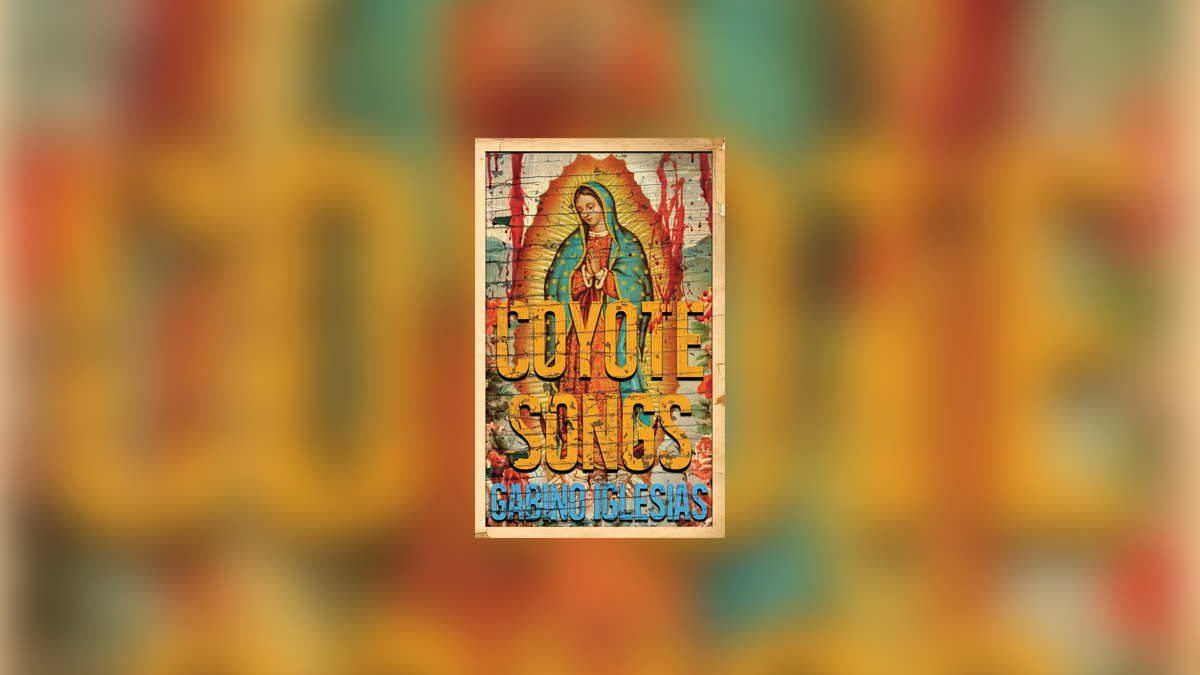
  • On reading: Coyote Songs by Gabino Iglesias

    On reading: Coyote Songs by Gabino Iglesias

    Title: Coyote Songs

    Author: Gabino Iglesias

    From the back: In Gabino Iglesias’ second novel, ghosts and old gods guide the hands of those caught up in a violent struggle to save the soul of the American southwest. A man tasked with shuttling children over the border believes the Virgin Mary is guiding him towards final justice. A woman offers colonizer blood to the Mother of Chaos. A boy joins corpse destroyers to seek vengeance for the death of his father. These stories intertwine with those of a vengeful spirit and a hungry creature to paint a timely, compelling, pulpy portrait of revenge, family, and hope. 

    The gist: This powerful, emotional book grabs you by your (eye)balls, rips into your heart and takes absolutely no prisoners. It’s a raw book, angry, sad, brutal, but cut through with heart. The images feel like folklore, the stories like violent fables, carrying you along and transporting you into a place where land and borders are as much characters as the people that walk across them. 

    Iglesias weaves Spanish into the words, and my limited vocabulary didn’t stop me from being pulled along, the rhythm giving it meaning regardless of the words themselves. 

    And this book also seems important, culturally and politically. It feels like the sort of stories that need to be told in the strange world we live in at the moment. 

    It’s a book that needs to be read, that screams at you from the bookshelf. It demands to be devoured, digested and understood. It’s violent and beautiful, and all the things in between, and it will demand your attention long after you finish turning the pages. 

    Favourite line: “Yeah, when nothing makes sense, I close my eyes and listen to my blood.”

    Read if: You want a brutal yet folkloresque insight into life on the border

    Read with: Some ice for your bruises because this book don’t pull no punches

    Get it: Coyote Songs by Gabino Iglesias

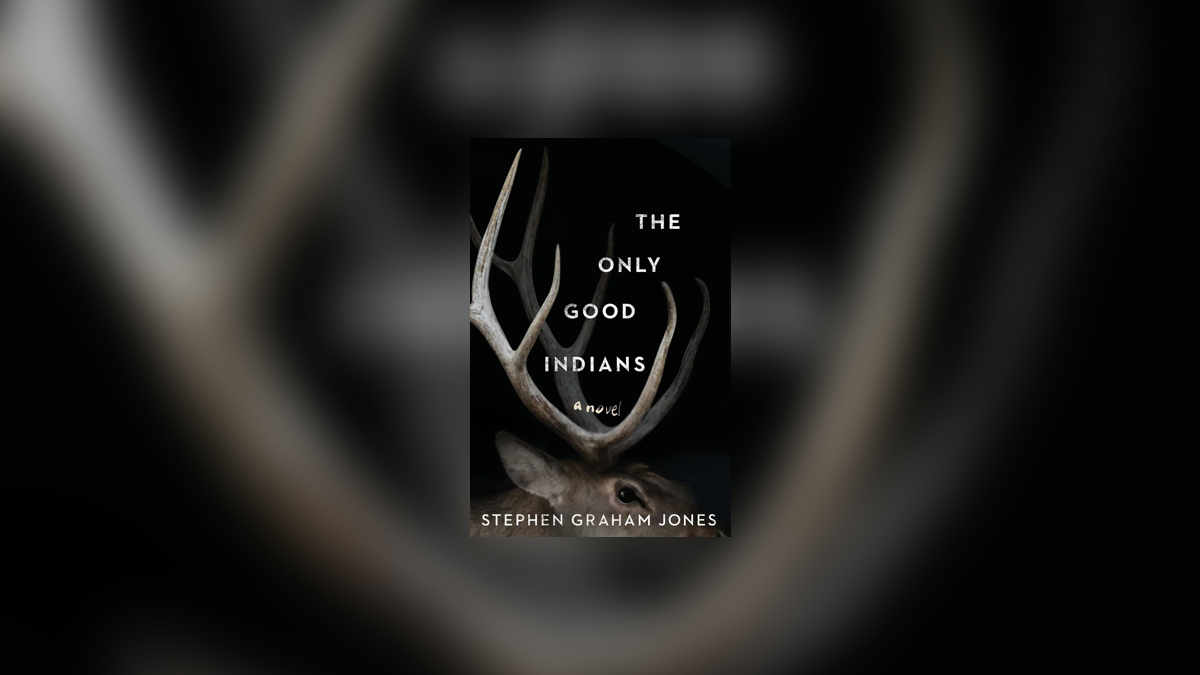
  • On reading: The Only Good Indians by Stephen Graham Jones

    On reading: The Only Good Indians by Stephen Graham Jones

    Title: The Only Good Indians 

    Author: Stephen Graham Jones 

    From the back: The creeping horror of Paul Tremblay meets Tommy Orange’s There There in a dark novel of revenge, cultural identity, and the cost of breaking from tradition in this latest novel from the Jordan Peele of horror literature, Stephen Graham Jones. 

    Seamlessly blending classic horror and a dramatic narrative with sharp social commentary, The Only Good Indians follows four American Indian men after a disturbing event from their youth puts them in a desperate struggle for their lives. Tracked by an entity bent on revenge, these childhood friends are helpless as the culture and traditions they left behind catch up to them in a violent, vengeful way. 

    The gist: This is a book of multiple horrors; spiritual, folklore-esque horrors, as well as real-world horrors of discrimination and racism. It’s a deep hearted book, at times genuinely heart-warming, at others shocking and brutal. Set against the backdrop of growing up as an American Indian, Jones explores life on and off the reservations. He introduces us to the four main characters in turn, and you come to know them like old friends. He shows us a small piece of their lives – a tragic coming of age tale, one that ultimately leads to a vengeful darkness pursuing them into their adult lives. He expertly balances the sense of community, tragedy, friendship and horror. 

    It’s the sort of book that etches images into your mind, leaves pictures sure to revisit you in your dreams. The power and character Jones portrays for the elk is genuinely impressive, the sense of place is brilliantly done, and the pacing draws you in – the book creeps up on you and refuses to let you go. 

    The Only Good Indians, with its blend of horrors but tinged with hope, proves to be the sort of read that stays with you long after the last page has turned. Hauntingly good stuff. 

    Favourite line: “Like they’re kids again, learning to break-dance.” 

    Read if: You want a horror that sends chills down your spine but has a strong, beating heart to it that cuts tenderness through the horrors. 

    Read with: Definitely no plans to go hunting any time soon. 

    Get it: The Only Good Indians by Stephen Graham Jones – out in July 2020

    ARC copy gratefully received from Netgalley and Gallery Books

  • On reading: Headcheese by Jess Hagemann

    On reading: Headcheese by Jess Hagemann

    Title: Headcheese

    Author: Jess Hagemann

    From the back: The day that Lorrie “accidentally” cuts off her little toe, she discovers what it’s like to be able-bodied and not want that body.

    After Bartholomew loses his left arm to a Sunni sniper, he’s inspired to start a new kind of church―one where both amputation and sex are types of performance art.

    Trice, a prosthetics engineer, receives the assignment of a lifetime when he’s asked to rebuild his son’s crippled frame.

    Haunted by the memory of his dead wife, George must take the ultimate measure to excise her ghost. For good.

    From sexual fetish to the clinical diagnosis of Body Integrity Identity Disorder, Headcheese makes the first cut, peeling back the epidermis to peer inside the minds and hearts of 26 people navigating the topography of flesh.

    The gist: This book…

    … it’s taken me a few weeks to let it sink in, to feel like I’ve digested it.

    This book…

    … it’s such an original novel – filled with illustrations (stunning) and insights (unusual, sometimes bizarre, sometimes brutal) into the lives of a selection of people and their relationships with their bodies.

    This book…

    … feels something like a cross between a Louis Theroux documentary and a Chuck Palahniuk novel, and yet it’s neither of these things – it’s a Hagemann novel and it’s fantastic.

    It’s such a strange read – it felt like reading a non-fiction book, or watching documentaries on Vice. It’s both beautiful and horrific. It made me curious about things I hadn’t realised I was curious about. It delved into thoughts and feelings that were simultaneously uncomfortable and fascinating.

    I wouldn’t normally comment specifically on the format, but I bought a paperback copy and given the excellent illustrations by Chris Panatier (the cover art was a significant factor in me picking up this book in the first place), and the ‘players list’ I’m glad I had the hard copy to flick through and admire.

    Headcheese is hard to define. It is shocking, challenging and fascinating. It’s beautiful and brutal. And it’s one of a kind.

    Favourite line: “humankind, by the way, only pretends to have evolved past truth to altruism”

    Read if: You want an original, unusual, raw read, that blurs the lines between documentary and fiction.

    Read with: An inquisitive mind, and occasionally a strong stomach.

    Get it: Headcheese by Jess Hagemann

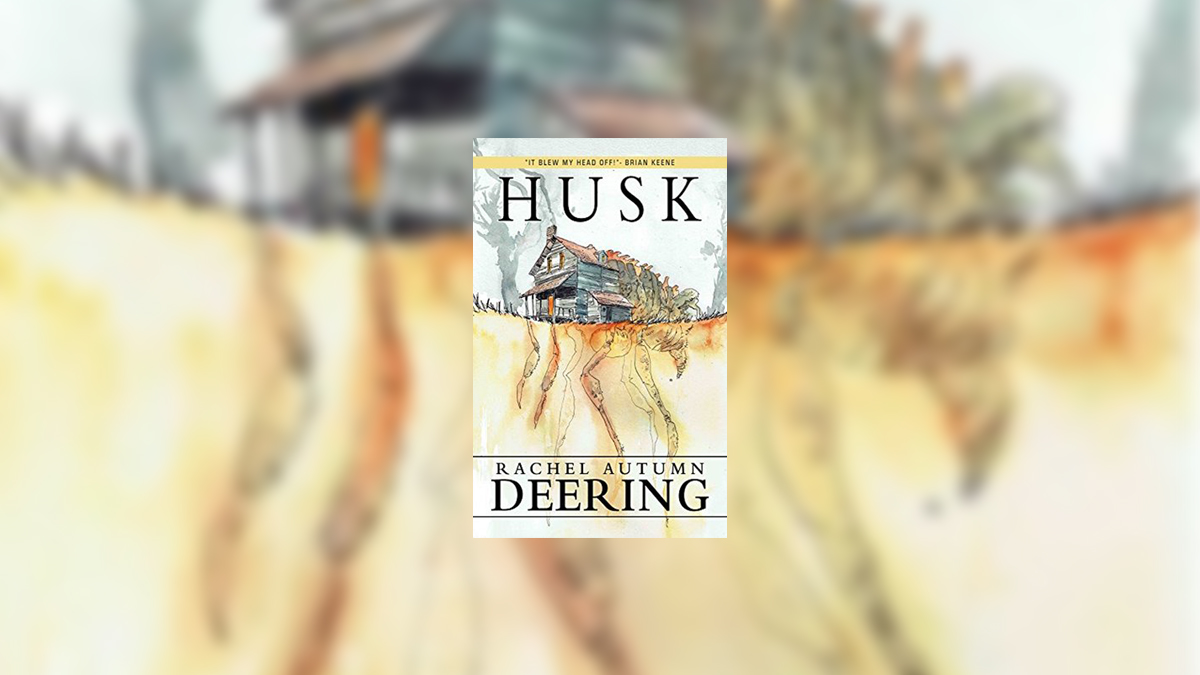
  • On reading: Husk by Rachel Autumn Deering

    On reading: Husk by Rachel Autumn Deering

    Title: Husk

    Author: Rachel Autumn Deering

    From the back: In this all-too-real work of horror fiction, Rachel Autumn Deering explores the mind of a young man who is struggling to cope with the effects of post-war stress, drug addiction, self-doubt, and loneliness as they manifest themselves into his deepest, darkest fears. 

    Kevin Brooks returns to his rural Kentucky hometown after a three-year-long tour of duty in Afghanistan. He has lost the grandparents who raised him, his lifelong best friend, and his trust in the government he once proudly served. When Kevin meets a kind, young girl named Samantha, he thinks his luck might have finally taken a turn for the better. But something else has its eye on Kevin. Something dark and brooding and mean. Something that knows Kevin better than he knows himself. 

    The gist: Husk may be short, but it is a neat, creepy work of psychological horror. Deering explores the after effects of war through her main character’s experiences returning home. It’s a sad tale, one where you can feel the hard core of loneliness growing inside of the main character, burrowing through him as he tries to come to terms with his life as it is now. The title is perfect. 

    What really drew me into Husk was the dialogue. Each line felt genuine, like you could hear the characters speaking, with turns of phrase that helped set the scene as much as Deering’s descriptions of the town itself. Touches of humour, and a peppering of (sometimes pretty… erm… heated) romance, contrast sharply against the creeping horror that might or might not be just in the mind. The book has a sense of realness to it, making the building tension even more unnerving. 

    Husk, short as it is, wastes few words. There are neat, satisfying call-backs and the whole thing is tight. And the end? Well, without wanting to give away too much so y’all can find out for yourselves, suffice to say that you might want to expect a bit of tragedy with your dose of terror. 

    Favourite line: “He always worried the Lord would show up when he wasn’t around. Or when he was on the toilet, taking care of a number two.”

    Read if: You want a neat nugget of psychological horror, laced with a sense of loneliness and sadness at its core.

    Read with: All of the lights on, and the cellar boarded up, just in case. And someone to hug afterwards.

    Get it: Husk by Rachel Autumn Deering

  • Fear in February: Women in horror month, the writers – Part Two

    Fear in February: Women in horror month, the writers – Part Two

    February is nearly up which means we’re coming to the end of Women in Horror month

    But not before I’ve had chance to share the second part of my fierce, female horror authors list with you. After all, everyone needs a little horror looming sinisterly on their bookshelves, wending it’s way to your eyeballs in the dead of night, crawling under your eyelids while you sleep to nest behind your brain. 

    *Ahem* 

    Catch up on the first instalment of the list here if you missed it. And fair warning horror fiends, these ladies will keep you up at night. 

    Alma Katsu: Making the list for The Hunger 

    Katsu brings us a bit of historical horror with her tale based on the Donner Party wagon train.  It’s a tense, eerie trip across the Midwest. Katsu cleverly combines the historical tale with fictional elements, with a range of characters to draw you in and invest you in the story.  Although you might know where it’s going, you don’t know how it gets there. And it gets there with an added dose of horror. Katsu’s take on the Titanic comes out later this year, and The Deep is totally heading straight onto my to-be-read pile. 

    Mira Grant: Making the list for The Newsflesh Trilogy 

    The Newsflesh Trilogy is perhaps some of the most fun I’ve had between the pages of a book(s). Grant (aka Seanan McGuire) writes a snappy, zombie infested adventure, with sassy characters and enough action to burn some calories. Zombies, journalism, political intrigue, what more could you possibly want? 

    Margaret Atwood: Making the list for The Handmaid’s Tale 

    Y’all are probably pretty familiar with The Handmaid’s Tale – book version or television version or both. I’m going ahead and calling this horror because gee-boy-have-you-read-it? If it ain’t horror then I’m not sure what is. It’s the sort of horror that is only ever a step away from us, from what we know. Atwood’s novel is pure dystopian nightmare, and somehow, disappointingly, still relevant in today’s world. 

    Stephanie Ellis: Making the list for Bottled 

    Ellis’s novella brings you a tasty morsel of modern day gothic horror. Claustrophic and atmospheric, she builds up the image of a house until it becomes a character in its own right. Spookiness reigns, with plenty of skin crawling frights along the way.

    Find out more about why this book is such a spookfest on my review earlier this month.

    More, more, feed me more horror. Who’s your favourite female horror author? Which female writers give you nightmares? Which ladies give you your go-to scares and shots of bookish adrenaline?

    Tamara writes mainly dark, surreal tales with a touch of science fiction. Her novel Grind Spark was longlisted for the Bath Novel Award 2014.

    “an exhilarating Ultra HD ride into a near, pre-apocalyptic future”

    Amazon reviewer